
For the past three years, youth participation in community development initiatives in the operational areas of SOS Children’s Villages Zimbabwe in Wards 1, 2 and 14 of Hwedza District had been difficult to achieve. Limited youth involvement threatened community resilience building efforts and progress toward self-reliance.
Hwedza District faces several challenges including drought, child abuse, veld fires, deforestation, and drug and substance abuse. Young people were often blamed for some of these problems, particularly drug and substance abuse and environmental damage. However, many of them felt powerless and unsure of how they could contribute to solutions.
“We used to hear about issues like climate change and veld fires, but we did not know what we could do about them,” shared one young participant. “It felt like these problems were too big for young people like us to solve.”
Through the SOS Children’s Villages Zimbabwe Climate Change Resilience Project, new opportunities began to emerge. The project aimed to empower young people with knowledge, confidence and practical tools to protect nature, generate income and become active contributors to their communities.
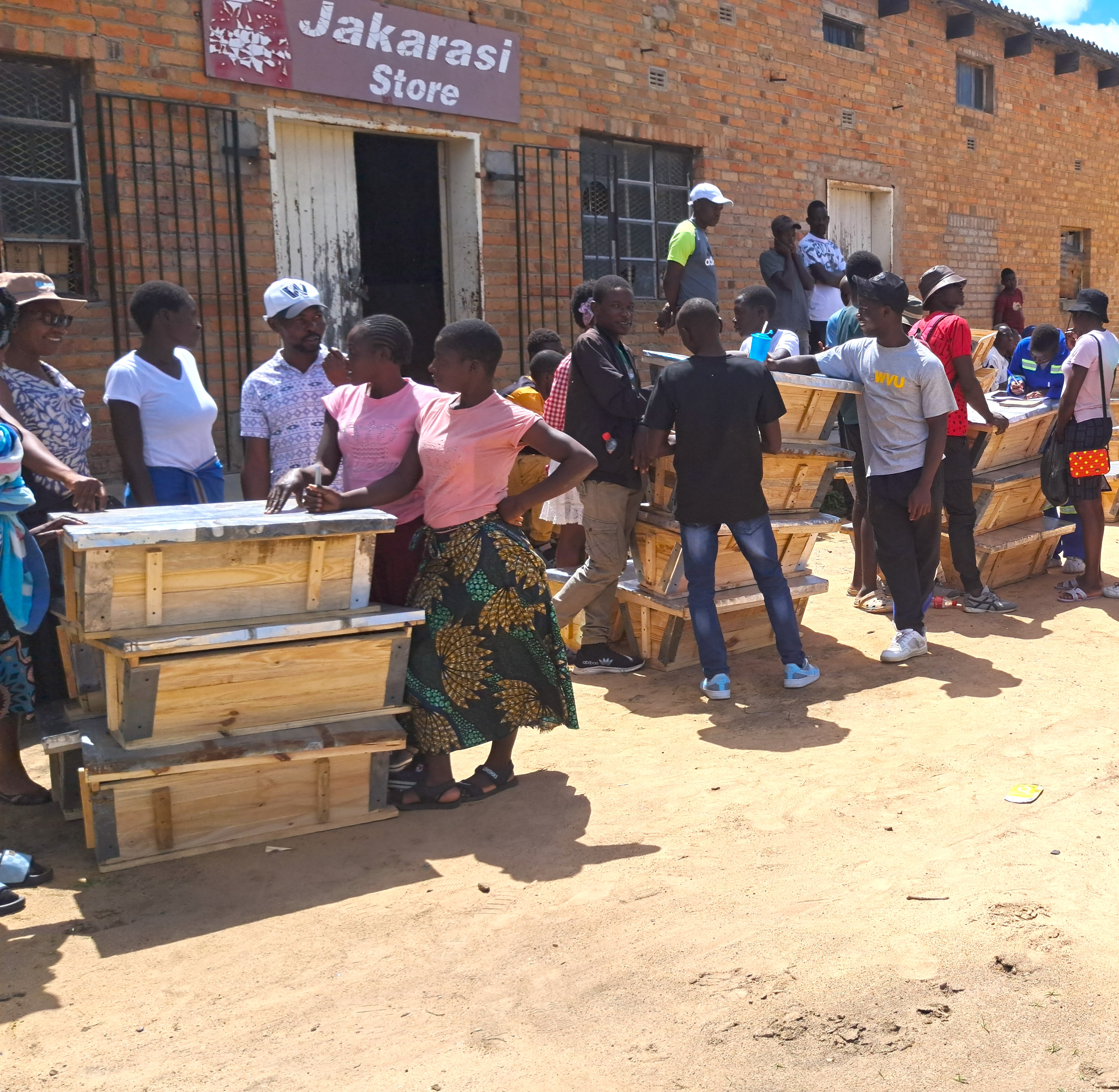
In December 2025, sixty-two young people, including forty young men and twenty-two young women, were selected to champion climate change resilience through the beekeeping value chain. They received training in leadership, conservation, climate change awareness and community engagement. The participants were also attached to a model farmer who serves as a Climate Change Champion, allowing them to learn practical climate adaptation innovations through mentorship.
Beekeeping was introduced as a nature-based livelihood opportunity that promotes environmental conservation while creating income. Out of forty beehives distributed, twenty-five have already been colonized, an encouraging development that has motivated the young participants.
“When we saw the bees occupying the hives, we felt proud,” said another participant. “It made us feel that we can do something meaningful for ourselves and for our community.”
The initiative has helped shift the mindset of many young people. Instead of viewing environmental and community challenges as impossible problems, they now see them as opportunities to act and contribute to change.
Support from the Ministry of Youth Empowerment, Development and Vocational Training, the Forestry Commission, and the Ministry of Women Affairs, Community, Small and Medium Enterprises Development has further strengthened the initiative. These partnerships are helping create pathways toward registering a youth led nature-based business cooperative.
For the young participants, the initiative is becoming a stepping stone toward self-reliance and active participation in community development. As they grow their beekeeping enterprises and leadership skills, they are beginning to shape their own future while contributing to stronger and more resilient communities in Hwedza.